
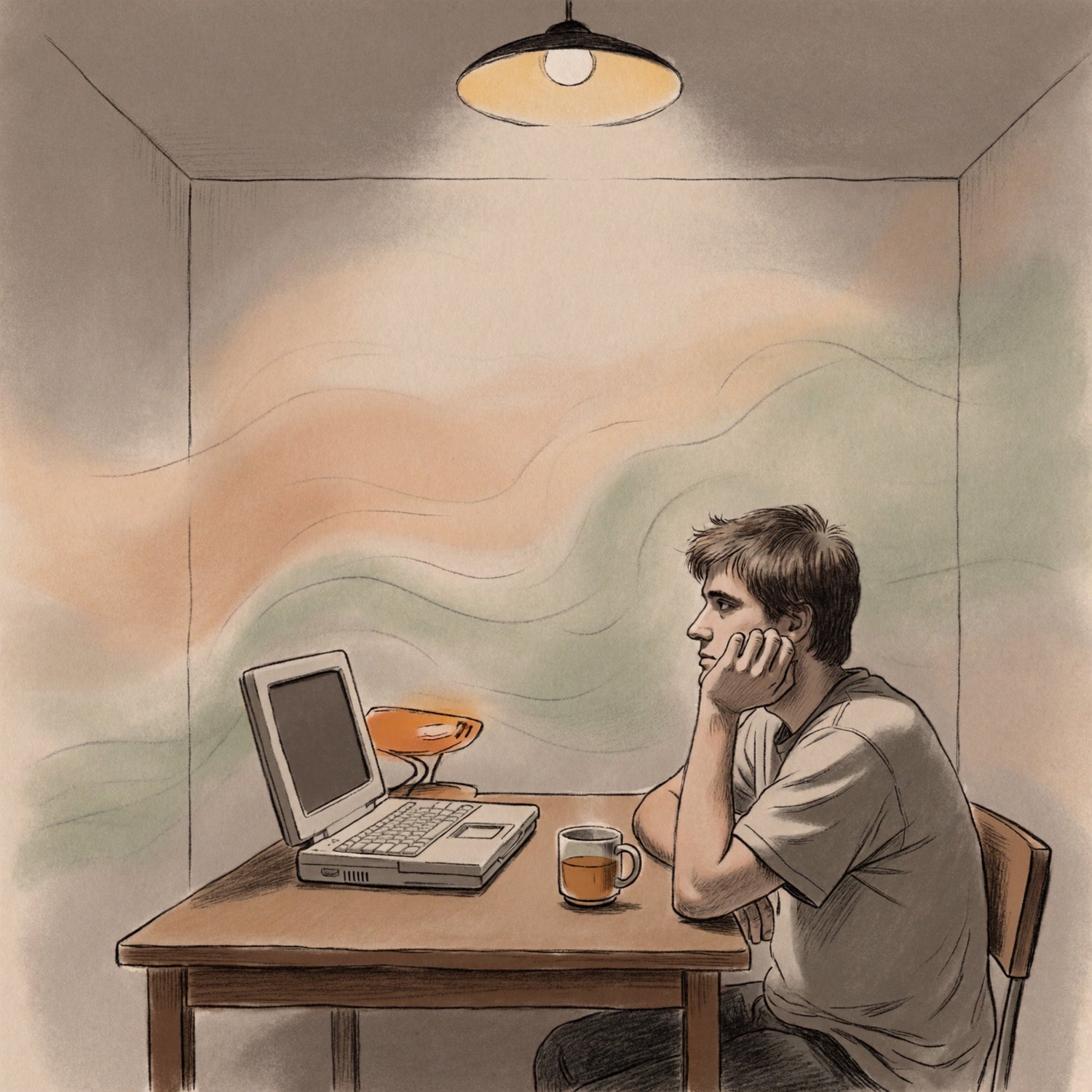
There is a specific kind of tired that arrives around 3 o'clock.
Not the tired that comes from not sleeping enough. Not the tired that follows a hard run or a long commute. This one is quieter, and stranger. You were fine at 11. You were sharp at noon — maybe even brilliant. You ate something reasonable. You sat back down. And then, gradually, without drama, the afternoon just… dissolved.
Your eyes went soft. The document on the screen became a blur of words you'd already read three times. The thought you were building — some careful, considered thing — slipped away before you could finish it. You made a cup of tea. You checked your phone. You told yourself you'd get back to it in ten minutes.
You didn't.
And the worst part is you blamed yourself. Not enough sleep, maybe. Too much to eat. Too distracted. But what if it wasn't you? What if the room had already made that decision for you?
Here is something that has been quietly established in research labs, and has somehow not made it into everyday conversation.
The air in a sealed, occupied room fills with CO₂. Every breath you exhale adds to it. In a room with good ventilation — windows open, fresh air cycling through — CO₂ sits at around 400 to 600 parts per million. That is roughly what outdoor air contains. That is the air your body was designed for.
But close the windows. Turn on the AC. Add one or two people, working, meeting, thinking. Within a couple of hours, CO₂ in that room climbs past 1,000 ppm. Often to 1,200. Often higher.
At those levels, something measurable happens to the human brain.
In 2012, researchers at Berkeley Lab and SUNY Upstate Medical University ran a controlled study. They put participants in an office-like chamber and exposed them to CO₂ at three concentrations — 600, 1,000, and 2,500 ppm — while keeping everything else identical. Temperature, humidity, ventilation rate: all constant. The only variable was the CO₂.
At 1,000 ppm, six out of nine scales of decision-making performance showed moderate, statistically significant decline. At 2,500 ppm, seven out of nine showed large declines. A follow-up study from Harvard's School of Public Health found a 15% drop in cognitive scores at approximately 950 ppm — a level that many sealed rooms hit before lunch.
Nine hundred and fifty parts per million. This is considered an acceptable indoor CO₂ level by ventilation standards. Acceptable, and quietly costly.
The sealed room is not an accident. It is the architecture of modern Indian life.
We closed our windows for good reasons. Outdoor pollution. Noise. Heat. The AC became non-negotiable — not a luxury but a necessity in cities where the temperature climbs past 40 degrees and the air outside carries its own problems. We built homes that seal tightly and offices that recirculate air. We made our environments comfortable in every measurable way.
Except one.
A study on non-residential buildings in Delhi found average CO₂ concentrations of 1,338 to 1,513 ppm in occupied offices — well above international air quality standards. And these were measured across full working days, not in hypothetical scenarios. This is the air in which deals are closed, strategies are made, and children sit down to study after school.
The room, it turns out, has been quietly extracting a toll.
The oldest system for managing CO₂ on this planet is not an engineering solution. It is photosynthesis.
For billions of years, plants and algae have been doing the work of taking CO₂ from the air and returning oxygen — continuously, quietly, without machinery. The reason a morning walk outside leaves you feeling clearer isn't just the movement. It is partly the air itself: lower CO₂, more oxygen, a different molecular composition that your body recognises as right.
What if that ratio could exist inside the room where you work?
Imagine a room where a living system — micro-algae, the most efficient photosynthesising organisms on earth — sits quietly, doing what forests do, but indoors. Actively drawing down CO₂. Actively returning fresh oxygen to the air. Not filtering the same air in a loop, but changing its composition. Making the room, in the most literal sense, breathe back.
That is what greenwaterHOME does. Not an air purifier — something categorically different. An Air Synthesizer. It does not remove pollutants and stop there. It shifts the molecular balance of the room.
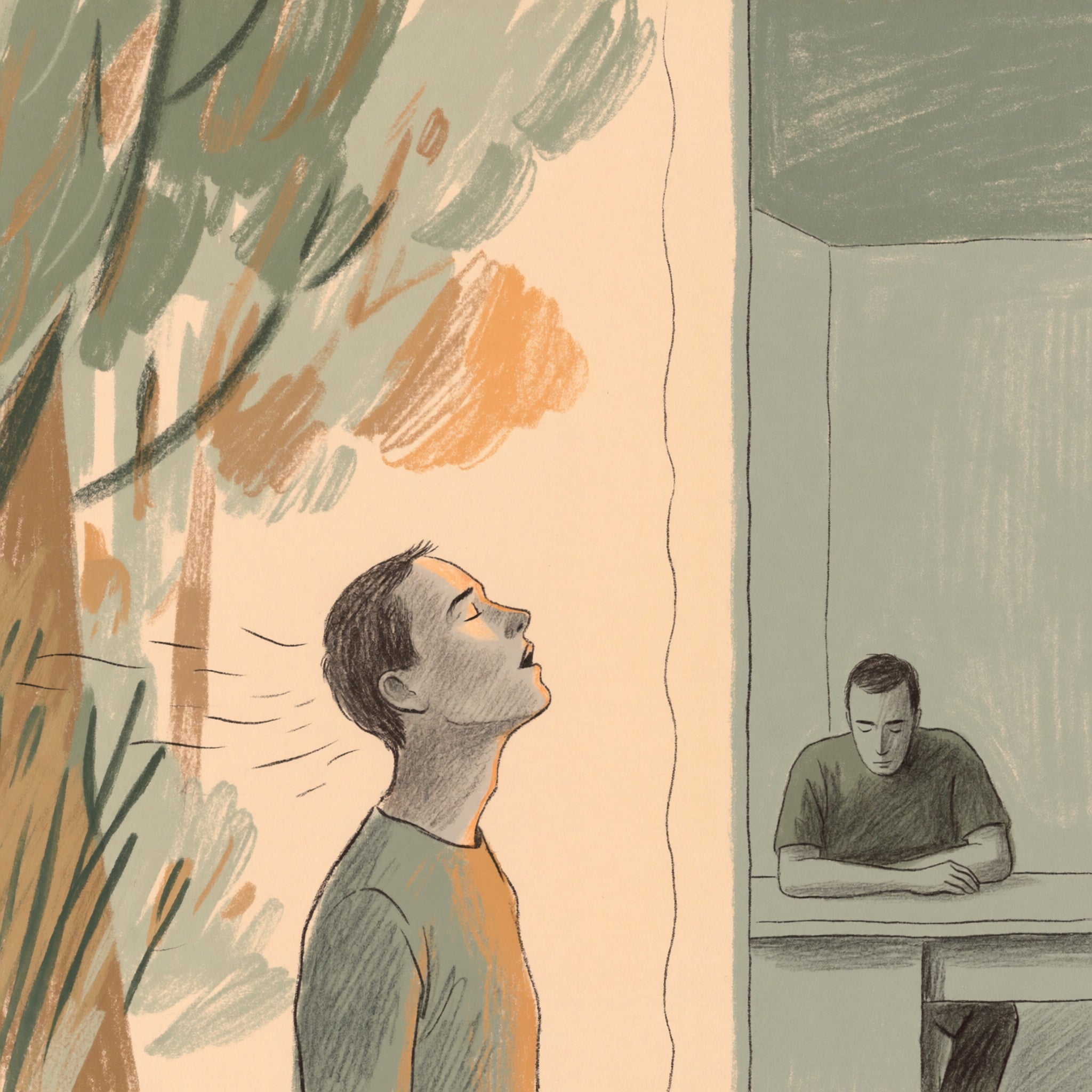
The 3 o'clock hour, it turns out, was always negotiable.
You cannot buy back the afternoons that have already gone. But there is something strangely hopeful in understanding what happened to them — in knowing that the fog was not a personal failing, that the mind that went quiet on you was responding rationally to the room it was sitting in.
The room sold your afternoon. And now you know.
What you do with that knowledge is yours to decide.



Leave a comment
This site is protected by hCaptcha and the hCaptcha Privacy Policy and Terms of Service apply.