
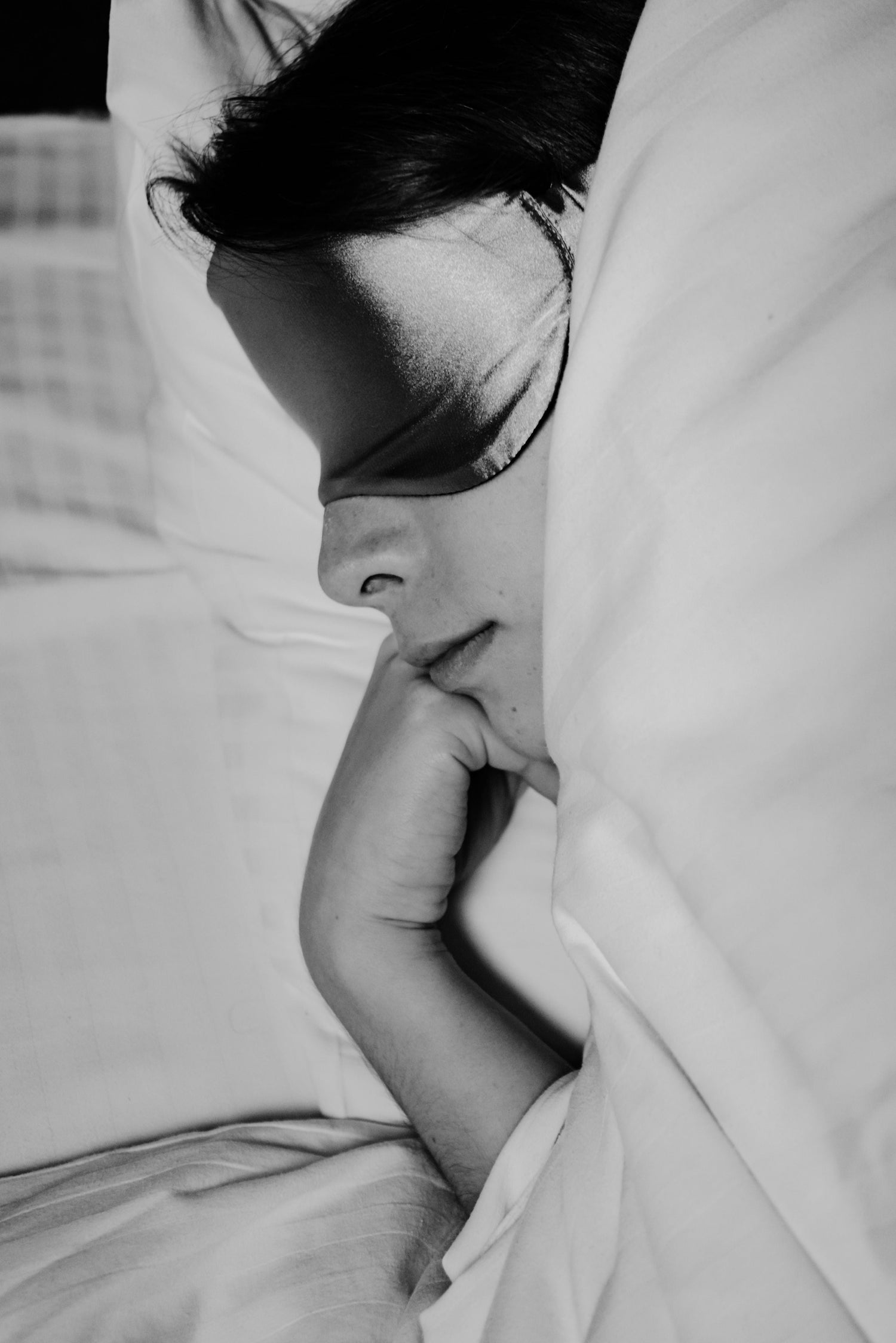
Eight hours in bed and you still wake up groggy. The mattress usually gets blamed. The room rarely does.
Sleep isn't one long flat state. It moves through stages, from light sleep to deep sleep to REM, in cycles that repeat every 90 minutes or so through the night. This pattern is what sleep researchers call sleep architecture. It's not just about how many hours you get. It's about whether you get to move through the full staircase of stages, undisturbed, enough times.
A closed bedroom door, a running AC, and two people breathing for eight hours is a small sealed chamber. Here's roughly what happens inside it, hour by hour.
10:00 PM — Lights out, door shut
CO2 in the room sits close to outdoor levels at this point, somewhere around 600 to 800 ppm. The room hasn't had time to seal in anything yet. This is the best air you'll breathe all night, and it's already downhill from here.
11:30 PM — First deep sleep window
The first cycle of the night carries the largest share of deep sleep (N3), the stage responsible for physical recovery. It's also the stage most sensitive to interruption. At this point CO2 is climbing but hasn't hit the range where sleep labs start to see measurable effects.
1:00 AM — CO2 crosses 1000 ppm
Past this threshold, sleep researchers have documented more frequent micro-arousals, brief shifts toward lighter sleep that don't fully wake you but do interrupt the cycle. You won't remember any of this in the morning. Your sleep architecture will remember it for you.
3:00 AM — REM-heavy stretch
REM sleep gets longer in the second half of the night, and it happens to be the stage most reactive to environmental disturbance. By now, in a small sealed room with the AC recirculating the same air, CO2 is often well past 1500 ppm.
5:00 AM — Peak buildup
This is usually when CO2 in a closed 500 sq ft bedroom peaks, sometimes past 2000 ppm depending on room size and occupancy. Sleep is already getting lighter as the body approaches wake time. The air quality and the sleep stage work against each other at exactly the wrong moment.
6:30 AM — Wake up
Eight hours on the clock. Grogginess on arrival anyway. The room did what it was built to do, stay quiet, stay cool, stay sealed. Nobody designed it to stay breathable.
None of this shows up on a sleep tracker measuring heart rate or movement. It shows up as the specific kind of tired that eight hours of sleep didn't fix.
A cracked window undoes the sealing you're paying your AC to maintain. Plants help, marginally, and not at bedroom scale. greenwaterHOME runs on living micro-algae that processes CO2 through the night without needing the door open or the AC off. It's not solving tired. It's solving the room.

Leave a comment
This site is protected by hCaptcha and the hCaptcha Privacy Policy and Terms of Service apply.