
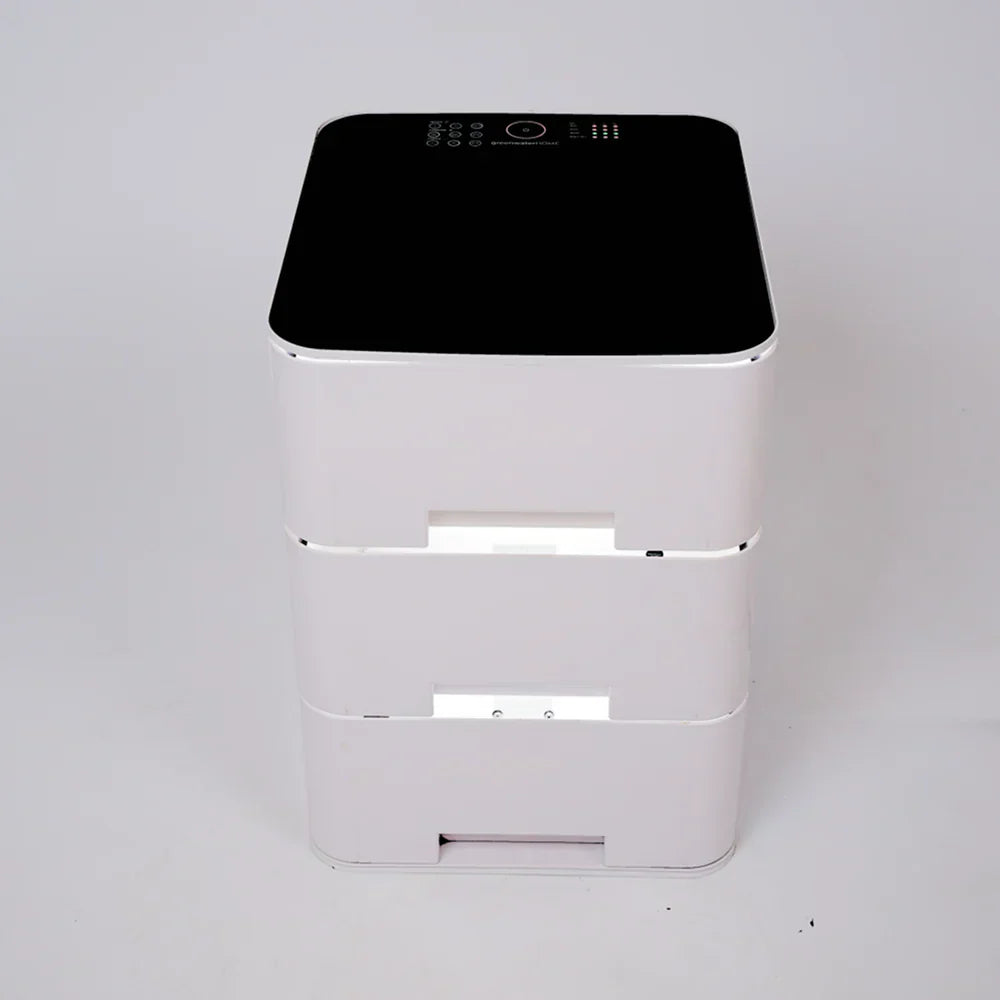
One filters the air you already have. The other creates fresh oxygen from scratch using living micro algae. Here is exactly how they compare.
QUICK ANSWER
An air purifier removes dust, allergens, and pollutants from the air using filters. An air synthesizer generates fresh oxygen by growing living micro algae that absorb CO2 and release O2 through photosynthesis. They are fundamentally different technologies solving different problems.
IN THIS ARTICLE
- What is an air purifier?
- What is an air synthesizer?
- 5 key differences between them
- Side-by-side comparison table
- Which one do biohackers actually need?
- Frequently asked questions
What Is an Air Purifier?
An air purifier is a filtration device. It pulls in the air inside your room and passes it through a series of filters. Those filters trap pollutants, particles, and allergens. The cleaned air is then pushed back into the space.
Most air purifiers use a HEPA filter to catch fine particles and an activated carbon layer to absorb odors and gases. Higher-end models add UV or ionization stages for bacteria and viruses.
What an air purifier removes:
- Fine particulate matter (PM2.5 and PM10)
- Dust, pollen, and pet dander
- Mold spores
- Smoke particles
- Some volatile organic compounds (VOCs)
Key Point: An air purifier is a subtractive technology. It makes your existing air less bad. It does not add anything to the air, and it does not change your oxygen levels.
What Is an Air Synthesizer?
An air synthesizer is an additive technology. Instead of cleaning what is already there, it produces something new: fresh oxygen.
The Greenwater Scientific Air Synthesizer uses living micro algae housed inside the device. Those algae absorb CO2 from the air around them and convert it into O2 through photosynthesis. This happens continuously, around the clock, as long as the algae are alive and receiving light.
What an air synthesizer produces:
- Fresh oxygen, generated continuously through photosynthesis
- Reduced CO2 levels in your indoor environment
- A living, self-sustaining air system powered by biology
By the numbers:
- 10x more photosynthetically efficient than typical plants
- 1.8kg of CO2 absorbed per kg of micro algae per day
- 50x more CO2 removed per square meter than indoor plants
The Science: Micro algae contain chloroplasts that capture light energy and split water molecules during photosynthesis. The hydrogen combines with absorbed CO2 to create glucose for algae growth, while oxygen is released as a byproduct. This process happens at a cellular level, across billions of algae cells, every second the device is running.
5 Key Differences Between an Air Synthesizer and an Air Purifier
Difference 1: One filters. One generates.
An air purifier takes your existing air and removes things from it. An air synthesizer creates new oxygen that was not in the room before. This is the single most important distinction. Filtration and synthesis are not the same process, and they do not produce the same outcome.
Difference 2: Air purifiers do not change oxygen levels. Air synthesizers do.
Normal indoor air sits at roughly 20.9% oxygen. Running an air purifier 24 hours a day will not move that number. An air synthesizer actively raises ambient oxygen by converting CO2 into O2 through photosynthesis. For biohackers focused on performance and recovery, this is the difference that matters.
Difference 3: Only one of them reduces CO2.
CO2 buildup in closed rooms is a real and measurable problem. Indoor CO2 levels above 1,000 ppm are linked to cognitive decline, fatigue, and headaches. An air purifier has no mechanism to address CO2. Micro algae consume CO2 as their primary food source. The more CO2 in the room, the more actively the algae work to remove it.
Difference 4: Mechanical technology vs biological technology.
Air purifiers are mechanical devices with fans, filters, and motors. Filters degrade over time and need replacing every few months. An air synthesizer is a biological system powered by living organisms that self-sustain with light and basic nutrients. There are no disposable filters to replace.
Difference 5: Different problems. Different outcomes.
An air purifier solves a pollution problem. It is the right tool if you are dealing with allergens, smoke, or airborne particles. An air synthesizer solves an optimization problem. It is the right tool if your goal is to enrich your air, raise oxygen availability, and reduce CO2. These are two entirely different goals.
Side-by-Side Comparison
| Feature | Air Purifier | Air Synthesizer |
|---|---|---|
| Core function | Removes pollutants via filtration | Generates oxygen via micro algae |
| Technology | Mechanical (HEPA, carbon filters) | Biological (living photosynthesis) |
| Increases O2 levels | No | Yes |
| Reduces CO2 | No | Yes |
| Removes allergens | Yes | No |
| Filter replacements | Yes, every 3 to 12 months | No filters needed |
| Nature-based | No | Yes |
| Best for | Allergy, pollution, smoke removal | Oxygen optimization, performance, recovery |
Which One Do Biohackers Actually Need?
If you are serious about optimizing your indoor environment for cognitive performance, sleep quality, and recovery, an air purifier alone is not enough.
Research on oxygen and brain performance shows that even at normal atmospheric levels, oxygen can be a limiting factor for cognitive function during demanding tasks. Studies on elevated oxygen availability at normobaric conditions found improvements in memory consolidation, processing speed, and multitasking performance in healthy adults.
Elevated CO2 works in the opposite direction. It slows cognition and increases fatigue. An air purifier addresses neither of these. It cleans existing air but does nothing to change its composition.
The Biohacker Take: Use an air purifier if you have specific pollution concerns like allergies, dust, smoke, or VOCs. Use an air synthesizer if your goal is to enrich the air itself. For a fully optimized environment, the two devices work together rather than competing. One removes the bad. The other adds the good.
Frequently Asked Questions
Does an air purifier increase oxygen levels in a room?
No. An air purifier only filters out pollutants and particles. It does not generate oxygen or change the O2 percentage in the air. Indoor oxygen levels stay at the atmospheric baseline of around 20.9% regardless of how long a purifier runs.
How does micro algae produce oxygen indoors?
Micro algae produce oxygen through photosynthesis. Using light energy, they absorb CO2 from the surrounding air and convert it into O2. This is the same process that plants use, but micro algae are 10 to 50 times more efficient per square meter. Inside the Greenwater Scientific Air Synthesizer, this process runs continuously, 24 hours a day.
Is an air synthesizer safe to use indoors?
Yes. The micro algae used in the Greenwater Scientific Air Synthesizer are non-toxic and completely safe for enclosed indoor environments. They are housed inside the device and release only oxygen. No harmful gases or byproducts are produced.
Can I use an air purifier and an air synthesizer at the same time?
Yes, and for most biohackers this is the recommended approach. An air purifier handles particulate removal and allergens. An air synthesizer handles oxygen generation and CO2 reduction. Together they give you a complete indoor air environment that both cleans and enriches the air you breathe.
What is the difference between an air synthesizer and an oxygen concentrator?
An oxygen concentrator uses a mechanical process to separate oxygen from room air and deliver it at high concentration, usually via a mask or nasal cannula. An air synthesizer produces oxygen biologically through photosynthesis and releases it into the ambient room air. One is a medical device for directed oxygen delivery. The other is an environmental device for whole-room air enrichment.


Leave a comment
This site is protected by hCaptcha and the hCaptcha Privacy Policy and Terms of Service apply.