
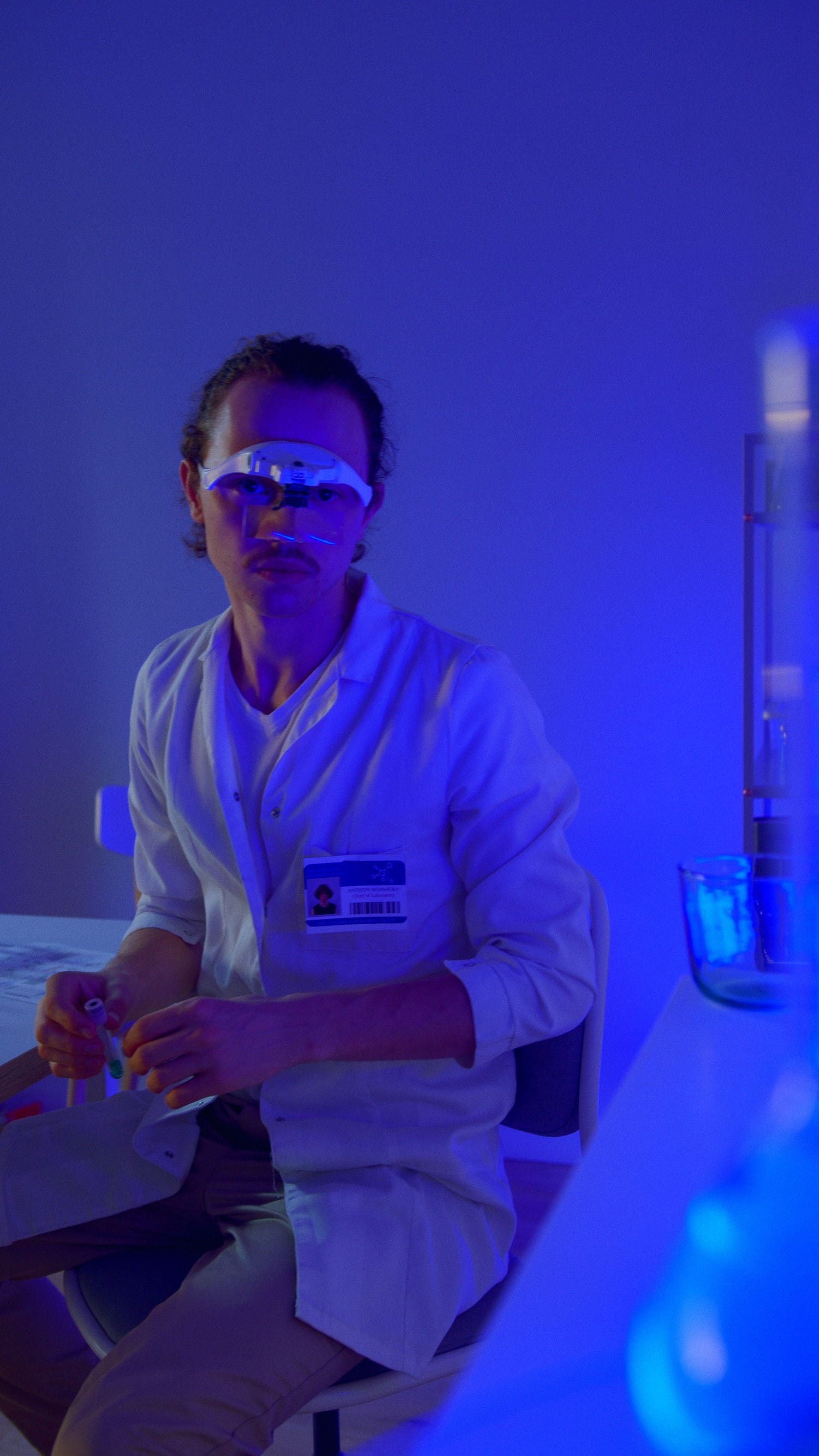
My friend has been tracking his sleep for eight months. Whoop on his wrist, blackout curtains on the windows, magnesium before bed, consistent 10:30pm lights out. His recovery scores are all over the place. Some mornings he wakes up at 68%. Others, same routine, he's at 41%. He's tried adjusting everything he can think of. He hasn't touched his bedroom air once.
This is more common than most people optimising their health want to admit.
Wearables have created an entire category of obsessive self-optimization. HRV, sleep stages, respiratory rate, SpO2, recovery scores. These are genuinely useful metrics. But they're outputs. They tell you how your body performed. They don't always tell you why. And one of the most consistent, untracked inputs sitting in the background is the air in the room where you sleep.
Here are the specific ways indoor air quality interacts with the metrics you're already tracking, and why your wearable can't see it.
1. CO2 directly suppresses HRV
Heart rate variability is a measure of your autonomic nervous system's flexibility. High HRV generally signals that your parasympathetic system is dominant, your body is recovering, you're not under physiological stress. Low HRV means the opposite.
CO2 activates your sympathetic nervous system. Even at levels that don't feel dramatic, elevated CO2 nudges your body into a mild stress response. Your heart rate becomes slightly more rigid, less variable. Your HRV drops.
A sealed bedroom overnight realistically climbs from around 400 ppm to somewhere between 1,500 and 2,500 ppm, depending on room size and how many people are sleeping in it. At the top of that range, you're sleeping in an environment that's chemically similar to a crowded, poorly ventilated office. Your Whoop or Oura is capturing the autonomic consequence of that. But neither device is measuring the cause.
2. High CO2 fragments sleep architecture without waking you up
This is the one that tends to surprise people. You don't need to wake up for elevated CO2 to hurt your sleep quality.
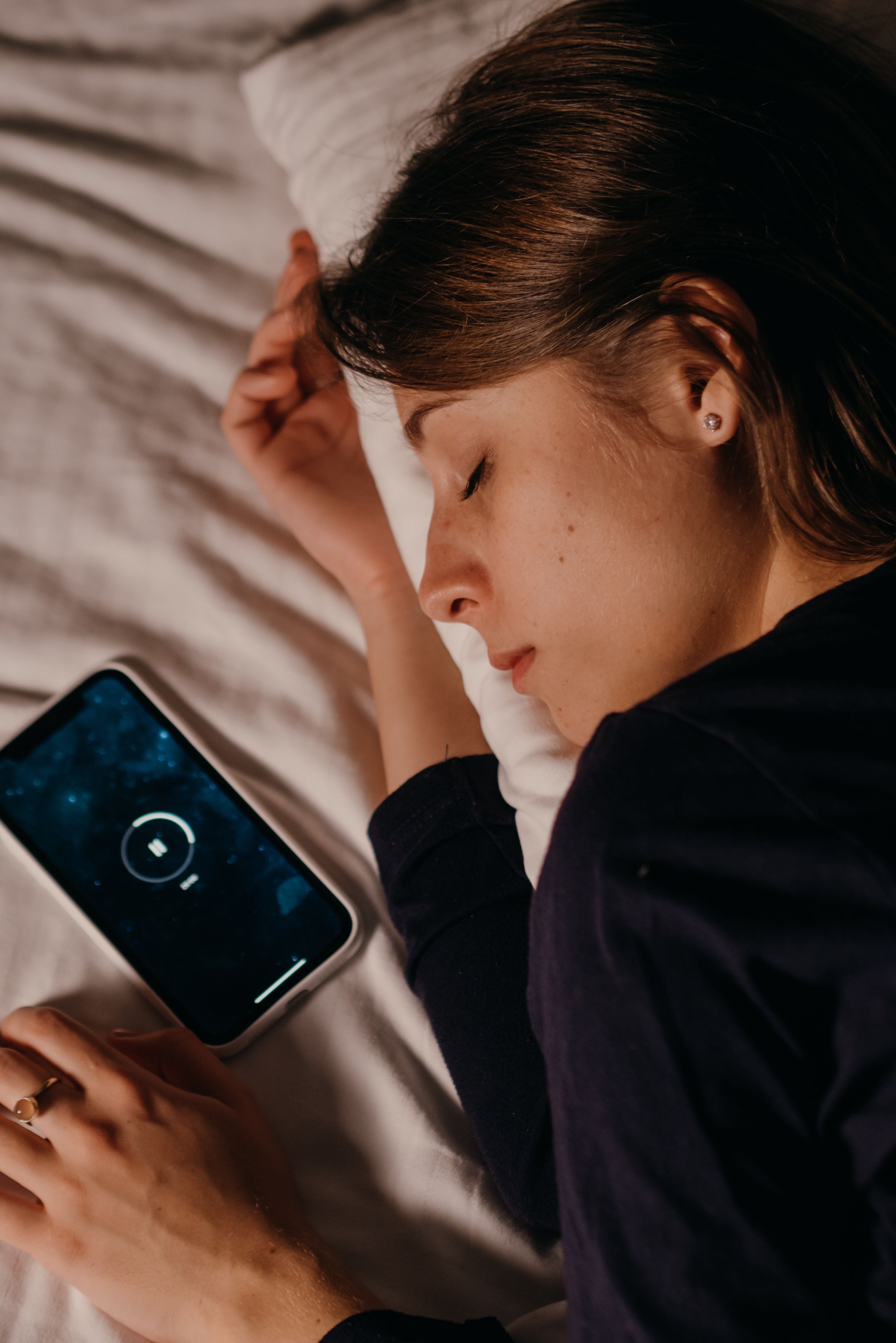
CO2 buildup over the course of the night causes micro-arousals, brief shifts out of deep sleep that you don't consciously register. Your wearable captures these as reduced time in slow-wave sleep or REM. You wake up with a sleep score of 62, no memory of any disruptions, and no obvious explanation.
The explanation is sitting in the air.
At 2,000 ppm and above, research has found measurable reductions in sleep quality, including more fragmented sleep cycles and reduced deep sleep duration. This isn't a fringe finding. It shows up consistently and the dose-response relationship is fairly linear. More CO2, worse sleep architecture.
3. Respiratory rate and SpO2 readings are artifacts of air composition
Your wearable tracks how many times you breathe per minute and how well your blood is oxygenated. Both of these are influenced by what you're breathing.
In a high-CO2 environment, your body increases respiratory rate to try to expel CO2 faster. So an elevated respiratory rate reading isn't always a sign of illness or overtraining. Sometimes it's your body compensating for a room that hasn't had fresh air exchange in eight hours.
SpO2 is less directly affected by CO2 in a sealed room at the levels most people sleep in, but chronically low-grade oxygen availability over hours does have a cumulative effect. If your SpO2 is consistently sitting at 95% rather than 98%, and you sleep in a small, sealed room, the room is worth looking at before your diet.
4. The recovery score correlation you're missing
Here's a useful thought experiment. Go back through your last 60 nights of data. Tag the ones where you slept with the window open versus fully sealed. Tag the nights where the outdoor AQI was high enough that you kept everything shut. See if there's a pattern.
Most people who do this find one. The sealed nights cluster toward lower recovery. It doesn't hold perfectly because there are other variables, but the signal is usually there.
Your wearable didn't tell you this because it can't see what's in the room. It can only see what your body did in response to it.
5. The optimization ceiling
There's a point in any biohacker's journey where the obvious variables are dialed in. Sleep timing, alcohol, caffeine cutoff, temperature, light exposure. These are well-understood levers and most serious trackers have already pulled them.
After that, the remaining variance in your scores starts coming from less obvious places. Indoor air is one of the highest-impact, lowest-addressed variables on that list. You're measuring outputs at a resolution of single percentage points while sleeping in an environment that can have CO2 concentrations five times higher than the outdoor baseline.
No amount of HRV tracking changes what's in the room.
What addressing it actually looks like
The CO2 problem in a bedroom is specific: it's generated by breathing overnight in a sealed space, and it accumulates. Opening a window solves it, but not always practically, and not if outdoor AQI is high.
What actually works is active CO2 drawdown combined with oxygen generation in the room itself. This is what separates an air synthesizer from an air purifier. Filtration removes particulates. Photosynthesis-based oxygen generation does something different: it pulls CO2 from the air and produces O2, the way a plant does but at a scale that's actually meaningful for a closed room.
The Greenwater Air Synthesizer runs a micro algae photosynthesis chamber alongside a 3-stage HEPA filtration system. The filters are washable and reusable, and the algae chamber is working continuously, not just when the fan is on. It's not a passive device. It's actively changing the composition of the air you're sleeping in.
If you're tracking HRV and sleep scores seriously, your bedroom air is probably the last major unaddressed variable. The wearable can show you that something's off. It can't fix the room.


Leave a comment
This site is protected by hCaptcha and the hCaptcha Privacy Policy and Terms of Service apply.